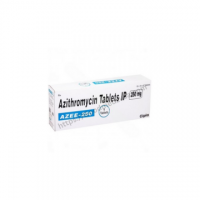
Azee 250 mg is a widely prescribed antibiotic that belongs to the macrolide group of medications. It is commonly used to treat bacterial infections, including respiratory tract infections, skin infections, ear infections, and sexually transmitted infections. With its broad-spectrum action, Azee 250 mg has become a trusted choice for patients across the US, UK, Canada, and Australia. Understanding its uses, dosage, and precautions ensures safe and effective treatment.
Azee 250 mg contains Azithromycin, a powerful antibiotic that works by stopping the growth of bacteria. It is available in tablet form, making it convenient for daily consumption. Doctors often recommend it due to its high efficacy and relatively low risk of side effects when taken as prescribed.
Azee 250 mg is primarily used for:
Respiratory infections: such as bronchitis, pneumonia, and sinusitis.
Skin infections: including cellulitis and soft tissue infections.
Ear infections: like otitis media.
Sexually transmitted infections: such as chlamydia.
It is important to take the medication exactly as prescribed to ensure the infection is fully treated and to prevent antibiotic resistance.
Azee 250 mg works by inhibiting bacterial protein synthesis. By targeting bacterial ribosomes, it prevents bacteria from multiplying, allowing the immune system to eliminate the infection. Its long half-life allows for shorter treatment courses compared to other antibiotics, which increases patient compliance.
Take Azee 250 mg orally, preferably on an empty stomach.
Swallow the tablet whole with a glass of water.
The dosage and duration depend on the type of infection. Commonly, it may be taken once daily for 3 to 5 days.
Always complete the full course, even if symptoms improve earlier.
Missed Dose: If you miss a dose, take it as soon as possible. If it is near the time of your next dose, skip the missed dose and continue with your regular schedule. Do not double the dose.
Overdose: Symptoms may include nausea, vomiting, diarrhea, or stomach pain. Seek immediate medical attention in case of overdose.
While generally safe, Azee 250 mg may cause some side effects, including:
Nausea or vomiting
Stomach pain or diarrhea
Headache or dizziness
Rarely, severe allergic reactions
Patients with liver or kidney conditions should consult their doctor before use. Prolonged or incorrect use may also lead to antibiotic resistance.
Store in a cool, dry place, away from direct sunlight and moisture.
Keep out of reach of children and pets.
Do not use after the expiration date.
Azee 250 mg may interact with:
Blood thinners (e.g., warfarin)
Antacids containing aluminum or magnesium
Certain heart medications (e.g., amiodarone)
Always inform your doctor about all medications and supplements you are taking to avoid adverse interactions.
Azee is available in multiple strengths, but 250 mg tablets are ideal for mild to moderate infections. Higher strengths, like 500 mg, are usually prescribed for more severe infections. Your doctor will determine the most appropriate dosage based on your condition.
Q1: Can Azee 250 mg be taken with food?
A1: Yes, but it is most effective when taken on an empty stomach.
Q2: Is Azee 250 mg safe for children?
A2: It can be prescribed for children, but the dosage depends on age and weight.
Q3: Can I drink alcohol while taking Azee?
A3: Alcohol is not recommended as it may increase side effects like stomach upset.
Q4: How long does it take to work?
A4: Most infections show improvement within 2-3 days, but the full course should be completed.
Q5: Can Azee 250 mg treat COVID-19?
A5: No, it is not effective against viral infections, including COVID-19.
Azee 250 mg remains a reliable antibiotic for managing bacterial infections safely and effectively across the US, UK, Canada, and Australia. By following your doctor’s instructions, understanding its working, and adhering to the recommended dosage, patients can recover quickly while minimizing risks.