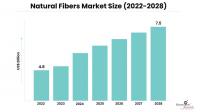
In recent years, the fashion industry has undergone a significant transformation, driven by a growing consciousness towards sustainability and environmental responsibility. As consumers become more aware of the ecological impact of their choices, the demand for sustainable fashion has surged, giving rise to a wave of innovative trends that prioritize ethical production practices and environmentally friendly materials. According to the report by Stratview Research, the natural fibers market is estimated to grow from USD 4.8 billion in 2022 and is likely to grow at a CAGR of 7.60% during 2023-2028 to reach USD 7.5 billion by 2028. At the forefront of this movement is the natural fibers market, playing a pivotal role in shaping the future of sustainable fashion.
The Shift Towards Sustainable Fashion
The traditional fast fashion model, characterized by its rapid production cycles and low-cost, disposable garments, has faced criticism for its detrimental effects on the environment and labor practices. However, as the consequences of this approach have come to light, consumers and industry insiders alike have pushed for change. This has led to the rise of sustainable fashion, a movement that seeks to reduce the industry's negative impact by promoting conscious consumption, ethical production, and the use of eco-friendly materials.
The Resurgence of Natural Fibers
Natural fibers, derived from plant and animal sources, have been utilized for clothing and textiles for centuries. In recent times, these fibers have experienced a resurgence in popularity due to their inherent sustainability. Materials like organic cotton, hemp, bamboo, and wool are biodegradable, renewable, and often require fewer synthetic inputs during cultivation and processing. This aligns perfectly with the principles of sustainable fashion, making them a sought-after choice for both designers and consumers.
Innovation and Diversity in Natural Fiber Offerings
One of the most exciting aspects of the natural fibers market is the constant innovation and diversification of available options. Researchers and manufacturers are investing in finding new ways to process and blend natural fibers, enhancing their performance characteristics and expanding their applications. For instance, innovations such as water-based dyeing processes, which reduce water consumption and pollution, are being integrated into natural fiber production. Additionally, the blending of fibers like organic cotton and Tencel™ creates textiles that are not only sustainable but also soft, durable, and versatile.
Empowering Local Economies
Another significant aspect of the natural fibers market is its potential to empower local economies, especially in developing countries. Many natural fibers, such as jute and sisal, are cultivated in regions where traditional agricultural practices are still prevalent. By investing in the production of these fibers, fashion brands can contribute to economic development, provide employment opportunities, and promote sustainable livelihoods in these communities.
Challenges and Future Prospects
While the natural fibers market holds immense promise for sustainable fashion, it also faces challenges that must be addressed. One such challenge is scaling up production to meet the growing demand without compromising the integrity of the fibers' sustainable attributes. Additionally, maintaining fair labor practices and ensuring the traceability of fibers along the supply chain are essential aspects of maintaining the industry's ethical standards.
Looking ahead, the future of the natural fibers market in sustainable fashion appears promising. As technologies continue to evolve and consumer preferences shift towards more responsible choices, the demand for eco-friendly materials is likely to remain strong. This presents an opportunity for continued growth and innovation within the natural fibers market.
Conclusion
The emergence of sustainable fashion marks a turning point in the history of the industry, and the natural fibers market stands as a critical player in this transformation. With their inherent eco-friendliness, versatility, and potential for positive social impact, natural fibers have become an integral part of the sustainable fashion movement. As the fashion industry evolves to meet the demands of a changing world, the role of natural fibers in shaping the future of fashion is not just significant, but essential. By embracing these fibers, fashion brands can contribute to a more sustainable and ethical industry, while consumers can make choices that align with their values without compromising style or quality.