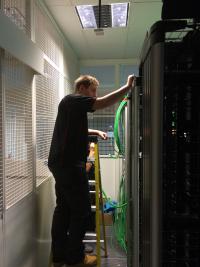
A current business is, to a large extent, defined by its network. Whether it’s handling cloud systems, mobile devices, or heavy loads of internal data, infrastructure truly makes a difference behind the scenes. That’s where professional wireless network installation services can come into play and create an end solution that provides strong coverage, stable performance, and safe access for staff and visitors.
A wireless system starts with a good site survey. No two buildings are the same; they all have different materials, layouts, and signals. “Good technicians will map the space, looking for interference points and hard-to-reach areas, and then plan where to place access points so they provide even coverage throughout." This prevents dead zones and maintains full connection to the router, even at peak usage times. After your design is complete, installation occurs with the proper tools and precision to provide fast and secure wireless functionality.
But a network doesn’t function on wireless access alone. SpringApplication, Not Really Neuroscientists and roboticists working at Radboud University in the Netherlands gave springtails (above), tiny bugs no more than one-tenth of an inch long, doses of LSD to see how it affected their behaviour. The skeleton has to be designed to grow, for flexibility and the technology of the day. And this is where a trustworthy network infrastructure design service will prove to be very useful. A good design takes into account such things as where the network cabling will run, how much bandwidth is needed, switch capacity, what expansion might occur in the future and whether you can still secure the system. Having a plan in place allows organisations to prevent bottlenecks and downtime and keep their digital operations running as they should.
A good infrastructure design also provides a form to the entire arrangement. Neat cabling, intelligent rack layouts and well-thought-out patching make it a pleasure for the engineers to work with and maintain. This is particularly crucial in multi-level, complex or niche application buildings. A good engineering design minimises ongoing maintenance (and hence durability) of the network as demand grows.
For companies replacing ageing systems, new cabling or the addition of new wireless access points could still make a big difference. With faster active speeds, stronger security solutions and enhanced stability, teams are able to work better together and access the latest applications without lag time. Professional installation also guarantees that equipment is set up properly, checked out and ready to go.
When wireless and tower design become partners, then together they create a network that performs in a balanced manner. Once implemented, organisations get increased reliability, enhanced productivity and a system that can be scaled as future technology evolves.